
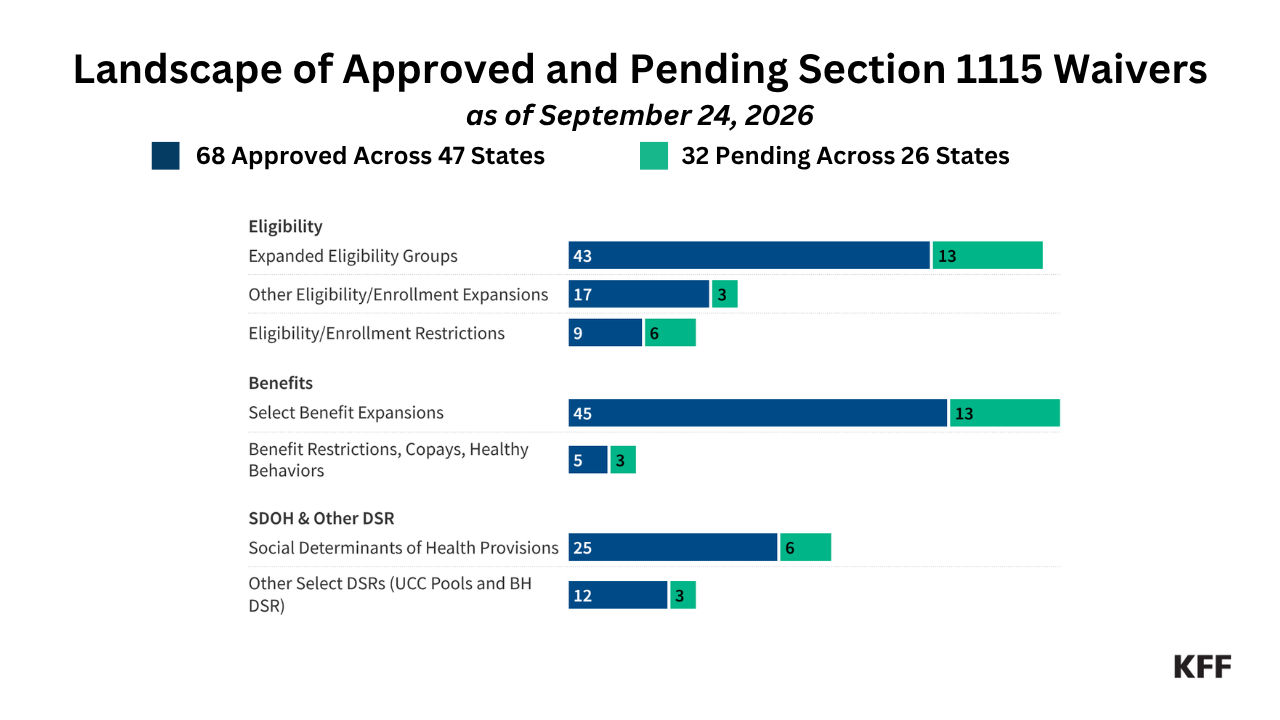
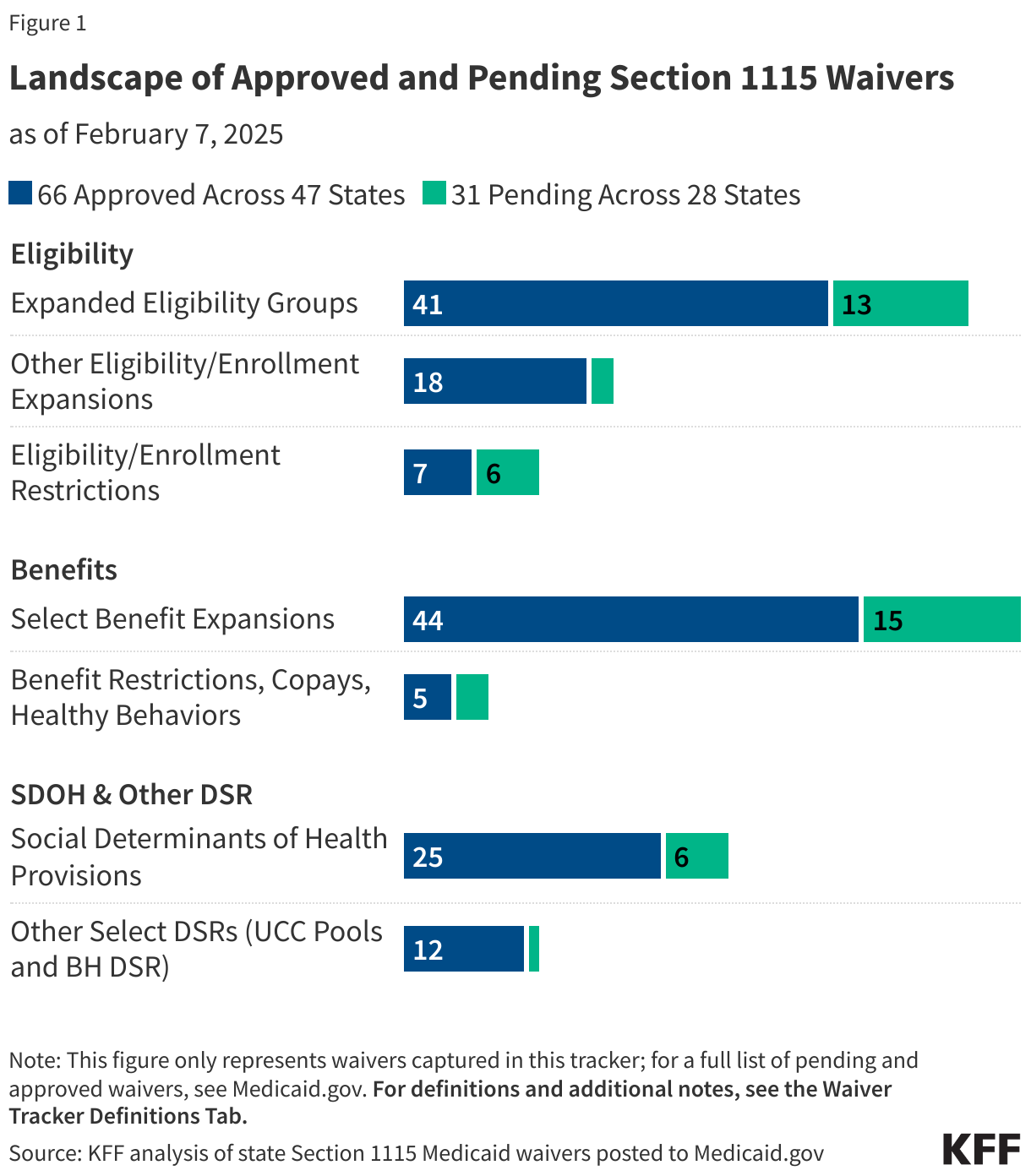
Medicaid Section 1115 demonstration waivers have long served as a vital laboratory for American healthcare policy, offering states the administrative flexibility to test innovative approaches that deviate from standard federal statutes. Under these waivers, state governments can experiment with novel eligibility rules, benefit structures, and delivery system reforms, provided the Department of Health and Human Services (HHS) Secretary determines that the initiatives promote the overarching objectives of the Medicaid program.
Nearly every state across the nation maintains at least one active Section 1115 waiver, while several states juggle multiple concurrent programs to address distinct local healthcare challenges. However, the landscape of these waivers is rarely static. Because these programs reflect both state-level priorities and the shifting political agendas of successive presidential administrations, tracking approved and pending provisions requires continuous observation. Recent policy developments, including shifting federal guidance on health-related social needs and new statutory work requirements, signal a substantial pivot in how these demonstration projects will operate in the coming years.
The Evolution of Work Requirements and State Implementation Strategies
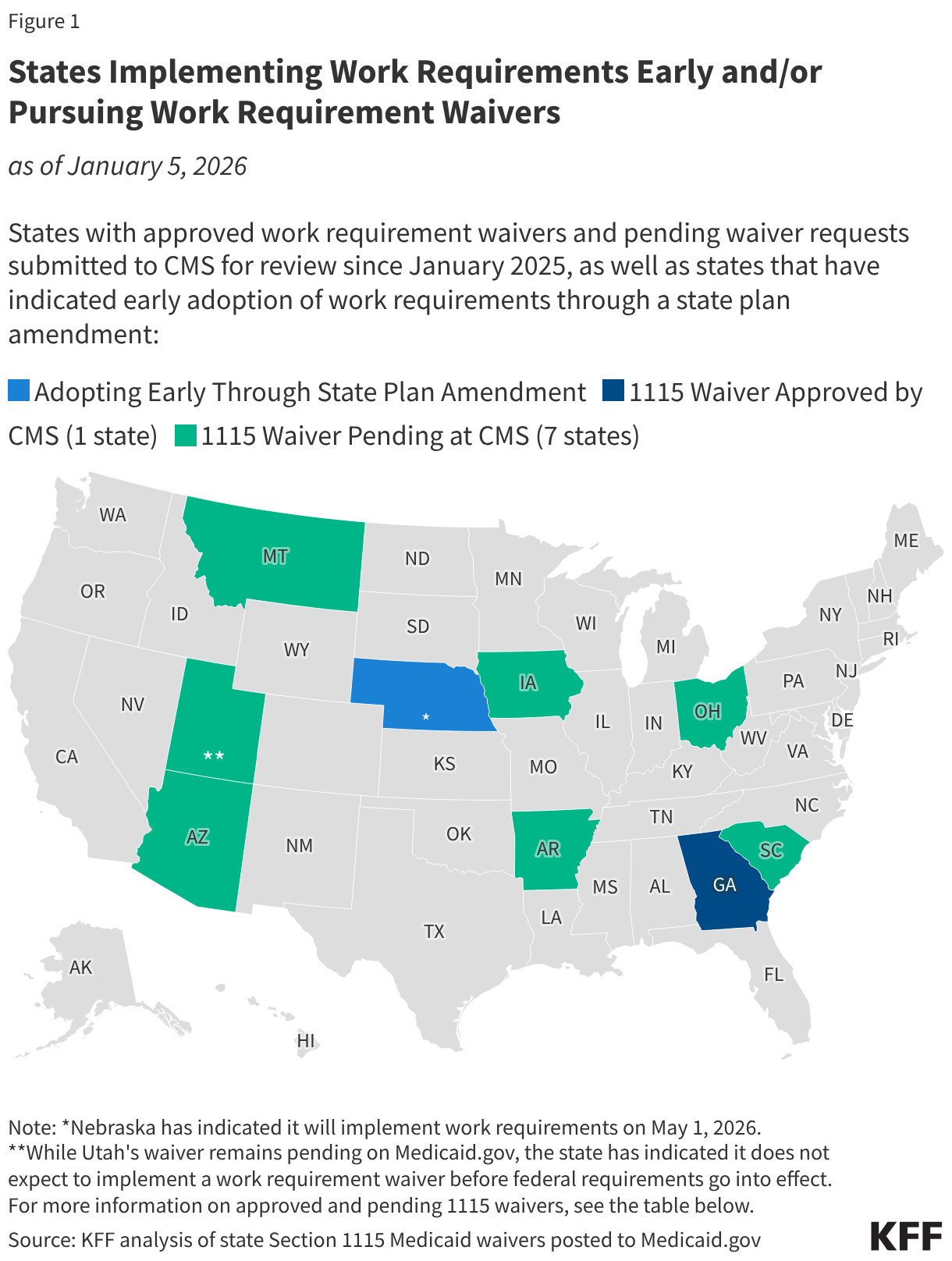
A major focal point of recent policy changes involves Medicaid work requirements. Under the reconciliation legislation enacted for 2025, states are required to condition Medicaid eligibility for adults in the Affordable Care Act (ACA) expansion group on meeting specific work requirements, with a federal enforcement date starting January 1, 2027. Despite this federal timeline, states have been given the option to implement these provisions ahead of schedule through either a state plan amendment or an approved Section 1115 waiver.
Nebraska has emerged as the pioneer among states planning early enforcement, announcing plans to begin enforcing federal work requirements via a state plan amendment starting May 1, 2026. Two additional states have scheduled early rollouts ahead of the January 2027 mandate: Montana will implement the requirements on July 1, 2026, followed by Iowa on December 1, 2026. Meanwhile, Arkansas has adopted a phased approach, announcing a soft implementation scheduled for July 1, 2026, which will encourage compliance without disenrolling individuals prior to the mandatory January 1, 2027 deadline.
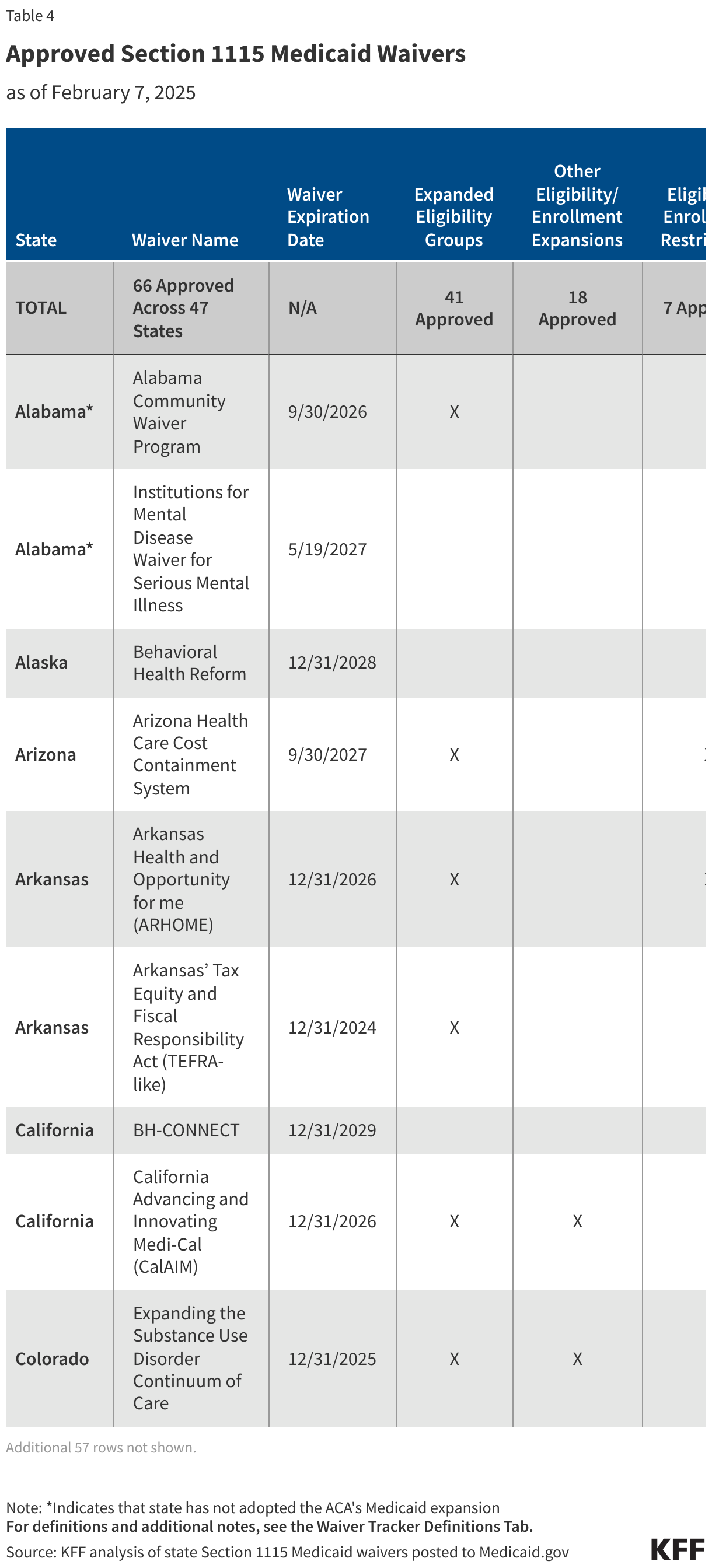
While several states submitted 1115 waivers targeting work requirements following the start of the second Trump administration, the passage of broader federal legislation has largely shifted state momentum away from these waiver applications. States eager to launch early work requirements are instead utilizing state plan amendments. Currently, Georgia stands as the sole state maintaining an active Medicaid work requirement waiver, surviving prior legal challenges aimed at halting the initiative under the Biden administration. Georgia’s waiver is slated to expire on December 31, 2026, at which point the state must transition into full compliance with the new national federal requirements taking effect the following day.
Health-Related Social Needs and Shifting Federal Guidance
The philosophical shift from one presidential administration to another is perhaps most visible in the management of health-related social needs, commonly known as HRSN, and broader social determinants of health. During the Biden administration, federal health officials heavily prioritized addressing HRSN, introducing comprehensive frameworks in 2023 and subsequent updates in 2024. These guidelines empowered states to use Section 1115 waivers to tackle non-medical drivers of health outcomes, such as housing instability, homelessness, and nutrition insecurity.
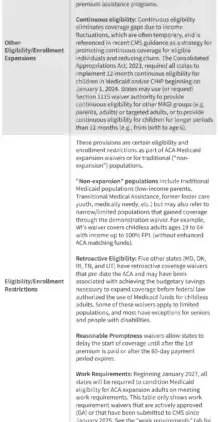
However, the federal policy environment shifted dramatically in March 2025 when the Trump administration formally rescinded the previous administration’s HRSN guidance. While Centers for Medicare & Medicaid Services (CMS) officials clarified that this rescission does not automatically nullify existing HRSN approvals already in place, future requests addressing social determinants of health will now face a rigorous, case-by-case evaluation process.
This policy reversal is part of a broader contraction of specialized federal funding streams tied to state waivers. In April 2025, the Trump administration announced a phased-out approach to eliminate federal financing for Designated State Health Programs embedded within waivers. Furthermore, in July 2025, CMS released fresh guidance declaring that the agency would no longer approve new continuous eligibility waivers or extend existing ones for either children or adults. Additional announcements in July outlined plans to phase out targeted initiatives designed to bolster the Medicaid workforce across primary care, behavioral health, dental services, and home- and community-based care.
Pre-Release Coverage for Incarcerated Individuals
Despite sweeping changes to social determinants and eligibility rules, certain waiver categories have attracted bipartisan interest from governors across the political spectrum. In April 2023, the Biden administration introduced a groundbreaking Section 1115 demonstration opportunity designed to encourage states to test transition-related strategies supporting community reentry for incarcerated individuals.
This specific waiver grants states a partial exemption from the longstanding inmate exclusion policy, which historically prohibited Medicaid from covering medical services delivered during incarceration, barring inpatient care. By allowing Medicaid coverage to resume during the pre-release period, these transition programs aim to establish seamless care continuity, reduce immediate health disruptions upon release, improve overall health outcomes, and ultimately drive down recidivism rates.
Under the previous administration, 19 states successfully secured approvals for these reentry waivers. The momentum continued into the second Trump administration, which approved four additional pre-release waivers in September 2026 while signaling that updated demonstration guidance for reentry would be released within the coming year. Both Republican- and Democratic-led states continue to pursue these pre-release provisions as a practical tool for addressing public health and criminal justice challenges.
Multi-Year Continuous Eligibility for Children
Another major area of recent waiver activity centers on stabilizing health coverage for vulnerable populations, particularly children. The Consolidated Appropriations Act of 2023 mandated that all states implement a baseline 12-month continuous eligibility period for children starting January 1, 2024. Going a step further, the Biden administration approved nine distinct waivers allowing specific states to provide multi-year continuous eligibility—protecting children from coverage loss from birth up to age six.

Research has consistently demonstrated that continuous eligibility policies effectively reduce Medicaid disenrollment and curb "churn," a phenomenon where individuals temporarily lose their health coverage due to administrative hurdles only to re-enroll shortly thereafter. Despite the proven benefits of reducing coverage gaps for young children, the Trump administration’s July 2025 guidance explicitly halted the approval of new multi-year continuous eligibility waivers and barred the extension of existing ones, marking another clear departure from the previous administration’s expansionary policies.
As states navigate this evolving regulatory terrain, tracking the status of approved and pending Section 1115 waivers remains essential for understanding the future direction of healthcare delivery, coverage stability, and state-federal relations in the Medicaid program.



