
Adults grappling with multiple or complex health conditions already navigate a daily labyrinth of physical limitations and mental health burdens. But according to a sweeping new national survey by KFF, these vulnerable patients face an additional, compounding crisis: severe struggles to pay their mounting medical bills, afford vital prescriptions, and secure necessary care.
The comprehensive research, which surveyed more than 25,000 adults, underscores a profound systemic failure. The fallout from these financial barriers falls disproportionately hardest on uninsured individuals who are managing serious health issues, a population that KFF leadership argues has been largely sidelined in broader national debates over healthcare affordability.
"If the first obligation of a health care system is to take care of the sick, we are failing that test," said Dr. Drew Altman, KFF Founding President and CEO. "Cost and access problems are hitting the chronically ill hard, and the chronically ill and uninsured especially hard."
Dr. Altman explored these alarming dynamics further in a companion "Beyond the Data" column, examining why those with the greatest health needs are often left out of mainstream conversations regarding the national cost-of-living and healthcare affordability crisis. He is also scheduled to bring these findings to the forefront in October during his keynote address at the National Academy of Medicine’s Annual Meeting, where he will discuss the state of chronic health conditions against the backdrop of the broader health policy landscape.
A Massive Dataset Exposes Deep Systemic Strains
The sheer scale of KFF’s Survey of Health Access and Caregiving provided researchers with a powerful analytical lens. Conducted in both English and Spanish between May 4 and May 26, 2026, the survey engaged a nationally representative sample of 25,873 adults. Crucially, the dataset included 16,677 respondents who reported receiving treatment for at least one serious or complex health condition within the past year.
This robust sample size enabled analysts to break down patient experiences across specific, high-stakes medical categories—including cancer, lung disease, diabetes, cardiovascular disease, and mental health conditions—as well as among individuals managing the compounding difficulties of multiple concurrent health problems.
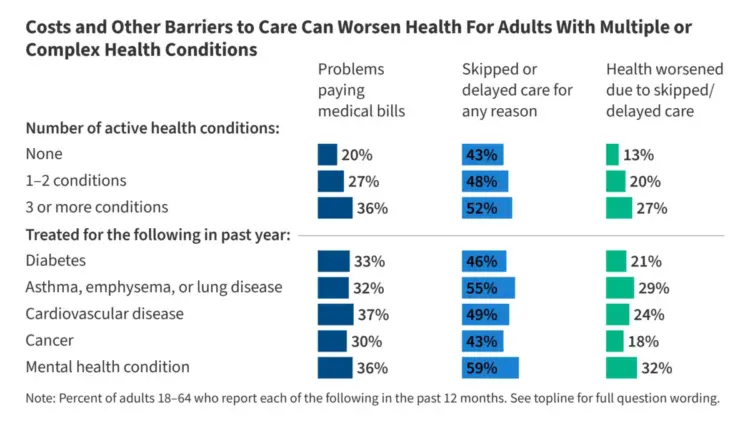
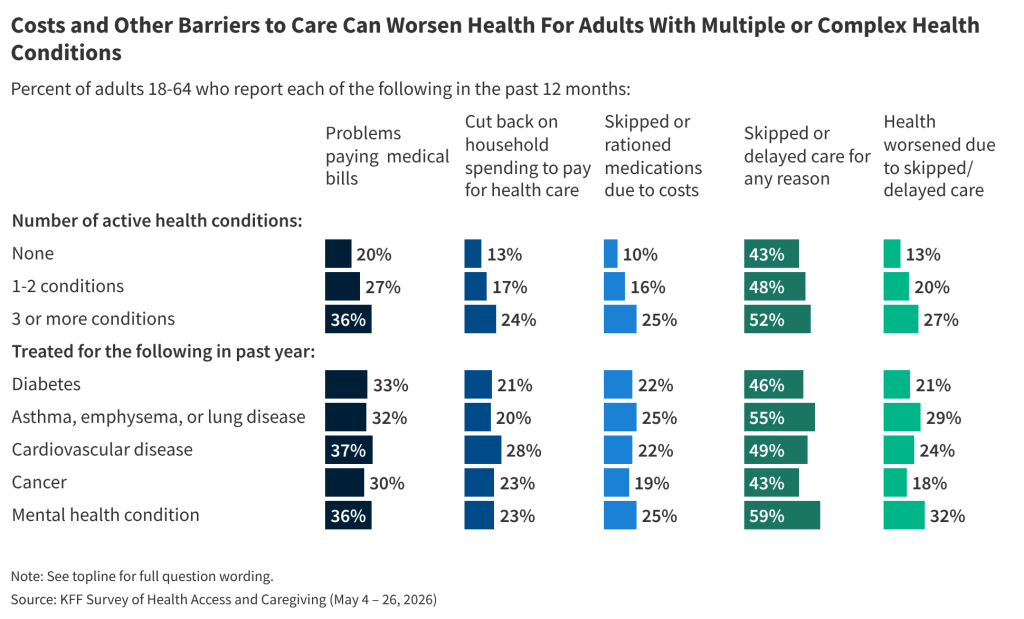
The findings paint a grim picture of financial distress among working-age adults. Approximately one-third of adults aged 18 to 64 who manage multiple or complex health conditions report that they struggled to pay, or simply could not pay, their medical bills over the past year.
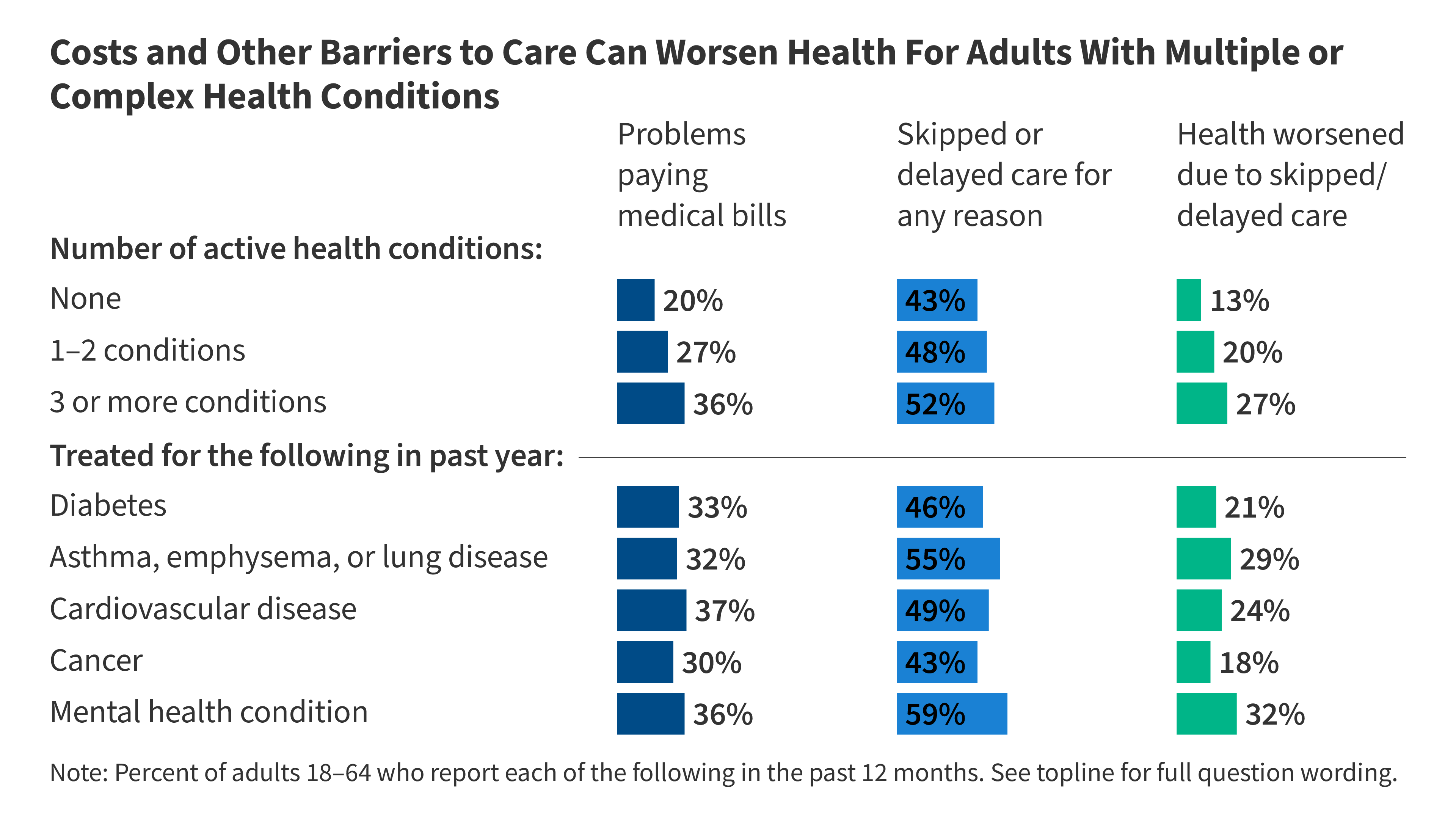
Certain diagnoses and patient profiles are associated with even higher rates of financial strain. For example, 36% of adults managing three or more distinct health conditions report struggling with medical bills, a figure mirrored by 37% of those with cardiovascular disease and 36% of those dealing with mental health conditions.
The ripple effects of these medical debts extend deep into everyday domestic life. About a quarter of adults juggling three or more conditions state they have been forced to cut back on fundamental household expenses—such as groceries, utilities, or housing costs—just to cover their healthcare bills. By comparison, only about 1 in 10 adults without active, complex health conditions report making similar drastic household sacrifices.
Barriers to Care and the Risk of Worsening Health
For millions of Americans, exorbitant health costs act as an impenetrable wall between diagnosis and treatment. About half of all adults dealing with three or more health conditions report skipping or delaying necessary medical care over the past year. Within that group, roughly 1 in 3 attribute that postponement directly to prohibitive costs.
Prescription medications represent another major casualty of the affordability crisis. Approximately 1 in 5 adults—and often more—with multiple or complex health conditions admit they have intentionally skipped taking their medications as prescribed because they simply could not afford to refill them.
The clinical consequences of missing care or rationing medicine are rarely benign. Substantial numbers of respondents across various disease categories report that their health noticeably deteriorated as a direct result of delayed or skipped care. This includes roughly 32% of those managing mental health conditions, 29% of those with lung disease, 24% of those with cardiovascular disease, 21% of those with diabetes, and 18% of cancer patients.
Even for insured adults, having coverage is no guarantee of smooth navigation. Insured individuals aged 18 to 64 with greater health needs routinely face bureaucratic roadblocks, including insurance coverage delays or outright denials for services, treatments, and medications explicitly prescribed by their doctors.
These administrative hurdles cross disease boundaries: about half of insured adults with three or more conditions report that an insurer denied or delayed coverage. Similar frustrations are reported by roughly 4 in 10 or more insured adults managing specific complex conditions, including diabetes (38%), lung disease (43%), cancer (43%), cardiovascular disease (45%), and mental health conditions (47%).
Uninsured Adults Face the Steepest Mountain
While insured patients face significant hurdles, uninsured adults with multiple health conditions endure the most acute affordability and access crises in the American healthcare ecosystem.
As Dr. Altman highlights in his analysis, a staggering 72% of uninsured adults with multiple health conditions report struggling to pay their medical bills. Half of this group has been forced to slash basic household spending just to manage their healthcare expenses.
The disparities in access are stark. Uninsured adults managing three or more health conditions are 20 percentage points more likely than their insured peers to report skipping or delaying needed care over the past year, standing at 71% compared to 51%. Furthermore, they are roughly twice as likely to admit they failed to take their medication as prescribed due to cost, at 51% versus 24%.
For these uninsured individuals, avoiding care carries severe, compounding dangers. Untreated medical conditions naturally progress over time, becoming far more complex, difficult, and expensive to manage down the road. Among uninsured adults with multiple conditions, 43% report that their health deteriorated after skipping or delaying care. For those dealing with uninsured mental health conditions, that figure climbs to 47%. Consequently, uninsured patients with complex needs are about one and a half times as likely as their insured counterparts to suffer a measurable decline in their health status.
The comprehensive KFF report also includes specialized findings examining older adults aged 65 and older who navigate multiple and complex health conditions. The full dataset and accompanying columns remain accessible through KFF for policymakers, healthcare providers, and researchers aiming to address the mounting pressures facing the nation’s sickest patients.



