
The landscape of reproductive healthcare across the United States has undergone a profound transformation in the years following the Supreme Court’s landmark 2022 ruling in Dobbs v. Jackson Women’s Health Organization. That decision effectively dismantled the constitutional right to abortion that had been protected for nearly half a century under Roe v. Wade, stripping away the federal standard that previously permitted abortions up to fetal viability in all states. In the wake of the Dobbs ruling, individual states have been empowered to enact sweeping bans and rigorous restrictions on clinicians providing abortion care long before the point of viability.
Organizations such as KFF, alongside the Guttmacher Institute and the Centers for Disease Control and Prevention (CDC), continue to closely track the shifting status of abortion access and availability nationwide. While numerous states have moved swiftly to ban the provision of nearly all abortions, others have actively worked to protect and expand access. Newly updated data reflecting the state of reproductive health through late 2025 and 2026 provides a comprehensive look at how abortion policies, patient demographics, telehealth expansion, and financial barriers have evolved in a post-Dobbs America.
What is Abortion and How Common Are Procedures?
At its core, abortion is the medical termination of a pregnancy, serving as a common healthcare service that a significant proportion of women utilize at some point in their lives. The medical community, including the National Academy of Sciences, Engineering, and Medicine (NASEM), categorizes abortion methods into distinct procedures. Furthermore, data indicates that medication has become the dominant method for terminating a pregnancy, with the Guttmacher Institute estimating that medication accounted for roughly 65% of all abortions in 2023.
Public confusion sometimes arises regarding emergency contraception (EC) pills and medication abortion pills, though they serve entirely different functions. Emergency contraception does not terminate an established pregnancy; rather, it functions as a contraceptive that delays or inhibits ovulation.
Tracking the sheer volume of abortions across the nation involves multiple institutions, including the CDC, the Guttmacher Institute, and the Society for Family Planning (SFP) through its #WeCount project. While the CDC has decades of experience collecting national health statistics, reporting to the federal agency remains voluntary, leading to gaps where several states do not participate. Additionally, federal reporting typically carries a two-to-three-year time lag, leaving the CDC’s comprehensive data from 2022—the year of the Dobbs decision—as a foundational baseline.
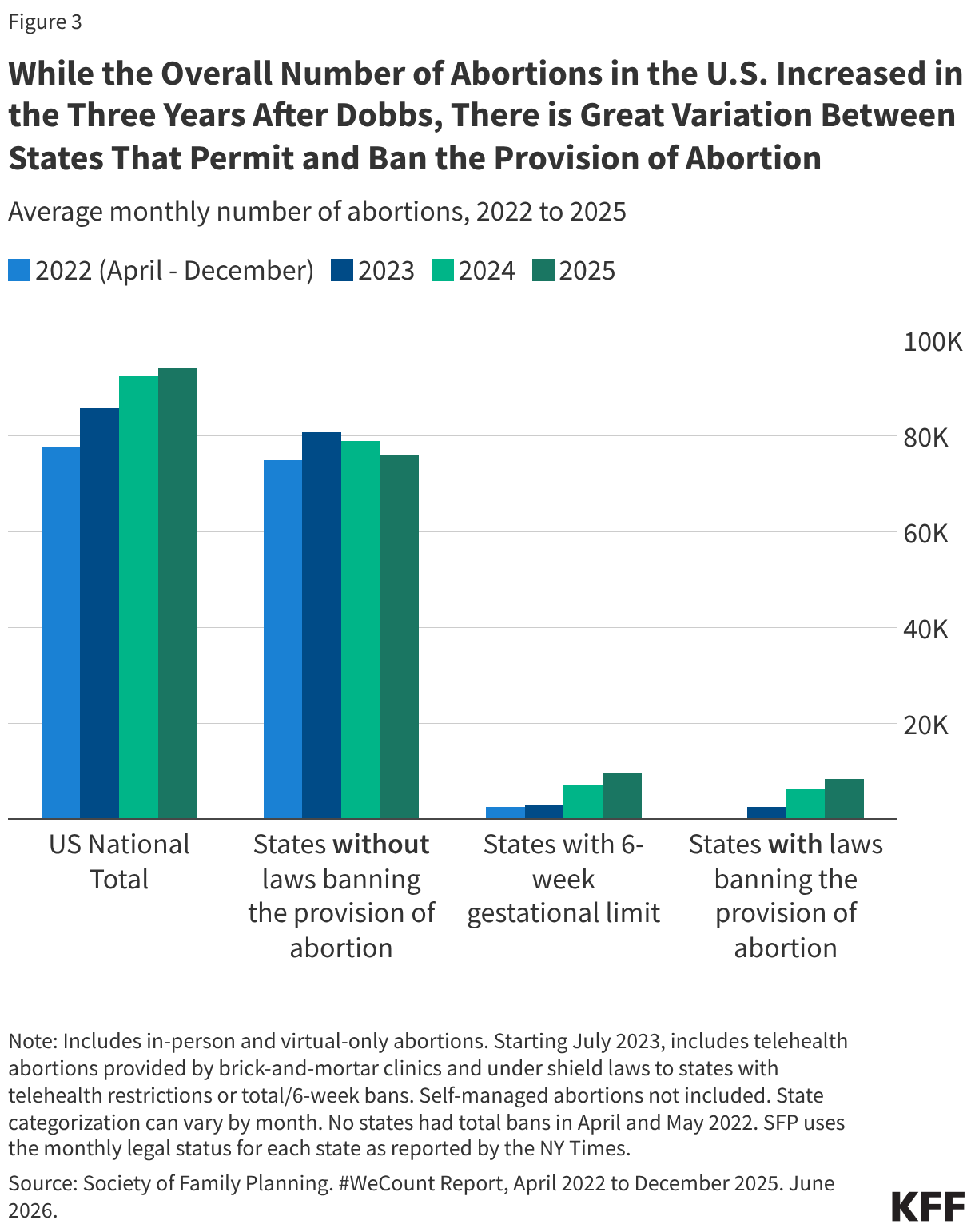
For the decade preceding the Dobbs ruling, the United States experienced a steady national decline in abortion rates, followed by a slight uptick in the years immediately leading up to the decision. Immediately after the ruling took effect, the absolute number of reported in-person procedures dropped as various states enforced immediate bans and strict gestational limits. However, long-term trends tracked by the Guttmacher Institute’s Monthly Abortion Provision Study and the SFP reveal a surprising paradoxical shift: the overall national volume of abortions actually increased in the three years following the ruling.
Data shows that the monthly average number of abortions climbed from 77,560 between April and December 2022, to 85,780 in 2023, 92,400 in 2024, and reached 94,090 per month in 2025. By the close of 2025, more than one million abortions—specifically an estimated 1,129,020 procedures—occurred nationwide. This overall national growth has been largely propelled by the rapid expansion of telehealth for medication abortion, the increased availability of lower-cost medication pills through virtual clinics, rising clinical capacity in states where abortion remains legal and protected, and the utilization of shield laws that allow clinicians in permissive states to mail pills to patients living in restricted jurisdictions.
The Safety and Regulation of Abortion Care
Decades of exhaustive medical research have consistently demonstrated that abortion is a remarkably safe healthcare service. Yet, despite its strong safety profile, it remains the single most heavily regulated medical procedure in the United States. Beyond the total bans enacted in several states, numerous jurisdictions impose auxiliary limitations that lack clinical justification. These include mandatory waiting periods, as well as parental notification and consent requirements that frequently delay patients from receiving timely care.
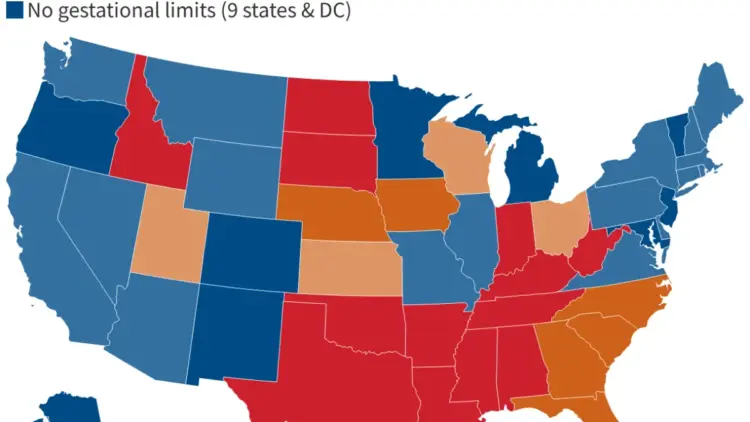
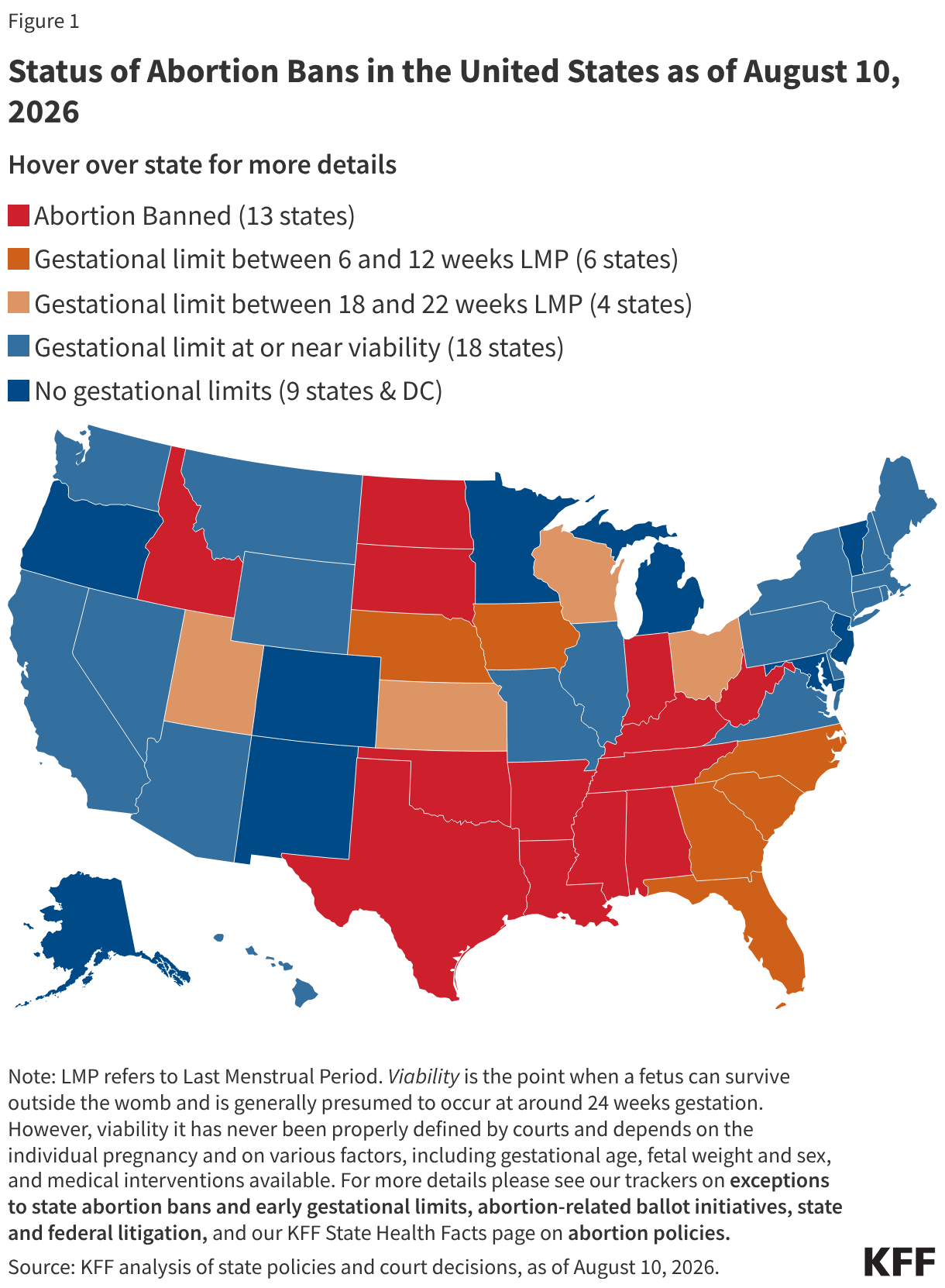
As of August 2026, the provision of abortion is entirely banned in 13 states, while another six states enforce strict early gestational limits ranging between 6 and 12 weeks. Conversely, the majority of other states permit abortion up to the point of fetal viability, which is generally recognized around 24 weeks of gestation.
Every state that enforces a total ban maintains narrow exceptions when an abortion is deemed medically necessary to prevent the death of the pregnant person. Furthermore, some state bans include conditional exceptions for cases where the pregnancy severely threatens the patient’s health, results from rape or incest, or involves a lethal fetal anomaly. In actual medical practice, however, healthcare providers and legal experts have found these exceptions largely unworkable, functioning safely only under the most extreme and unambiguous circumstances.
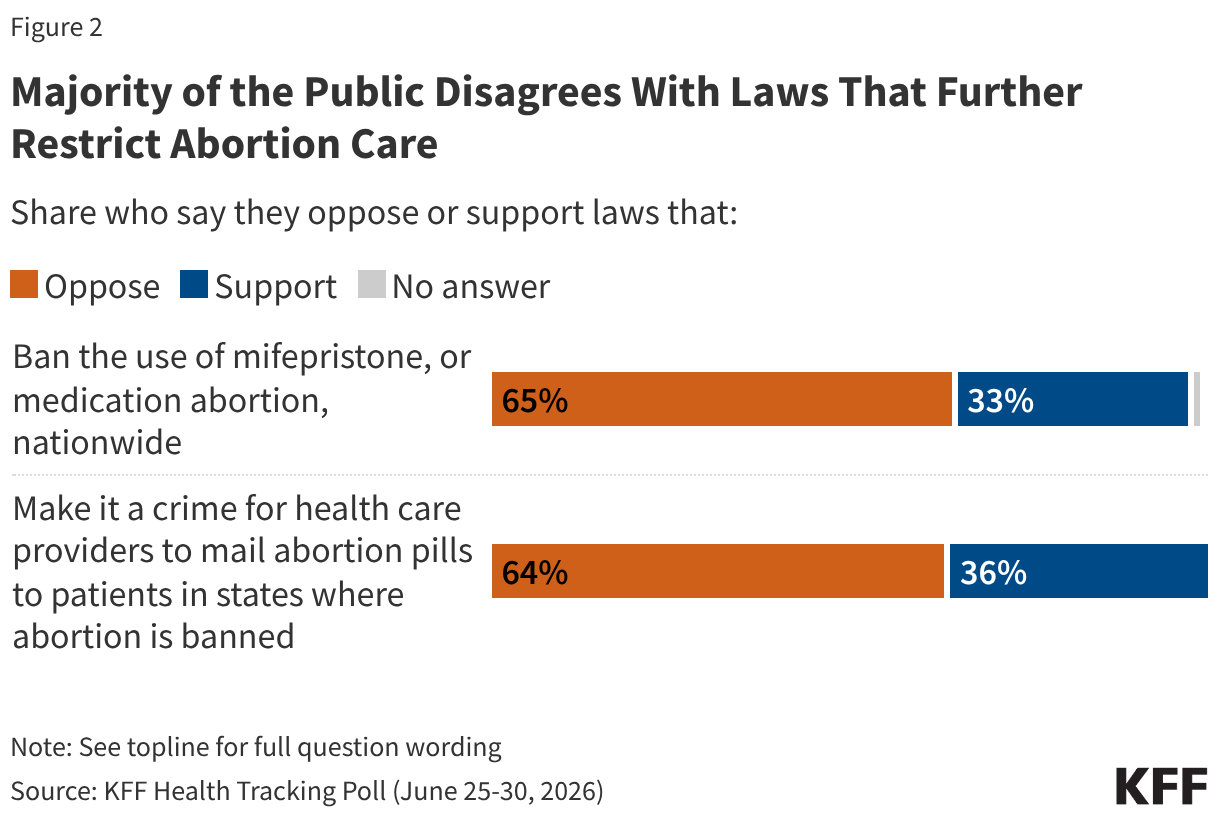
Despite the heavy regulatory environment and sweeping restrictions, public opinion research conducted by KFF indicates strong, widespread support for maintaining abortion access and broad opposition to the criminalization of reproductive healthcare.
Who Receives Abortions and When?
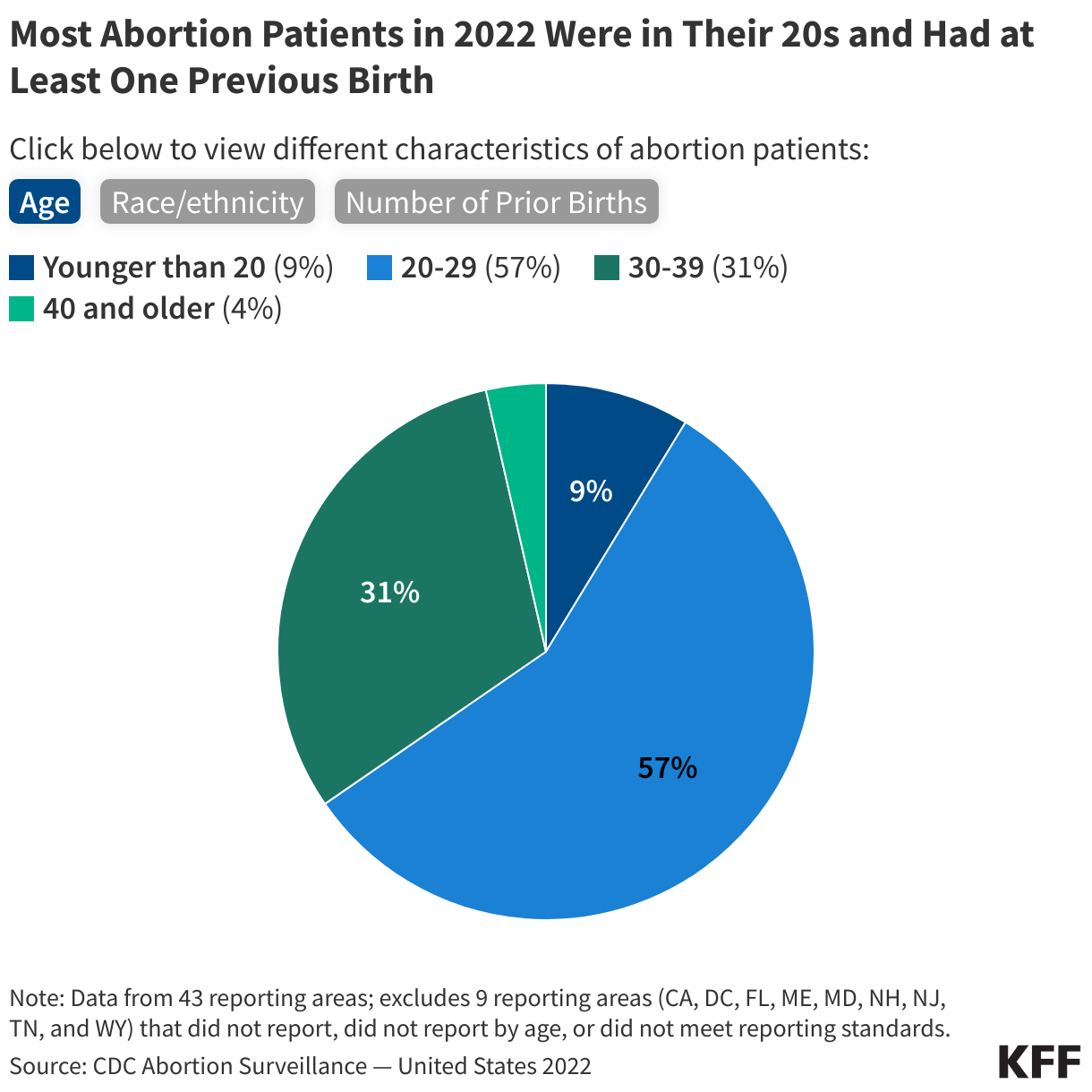
Detailed demographic insights regarding abortion patients primarily stem from CDC surveillance data. In 2022, the most recent year for which comprehensive federal data is available, individuals obtaining abortions spanned a wide spectrum of ages, socioeconomic backgrounds, and racial and ethnic groups. However, the demographic majority of patients consisted of women in their twenties, low-income individuals, and women of color.
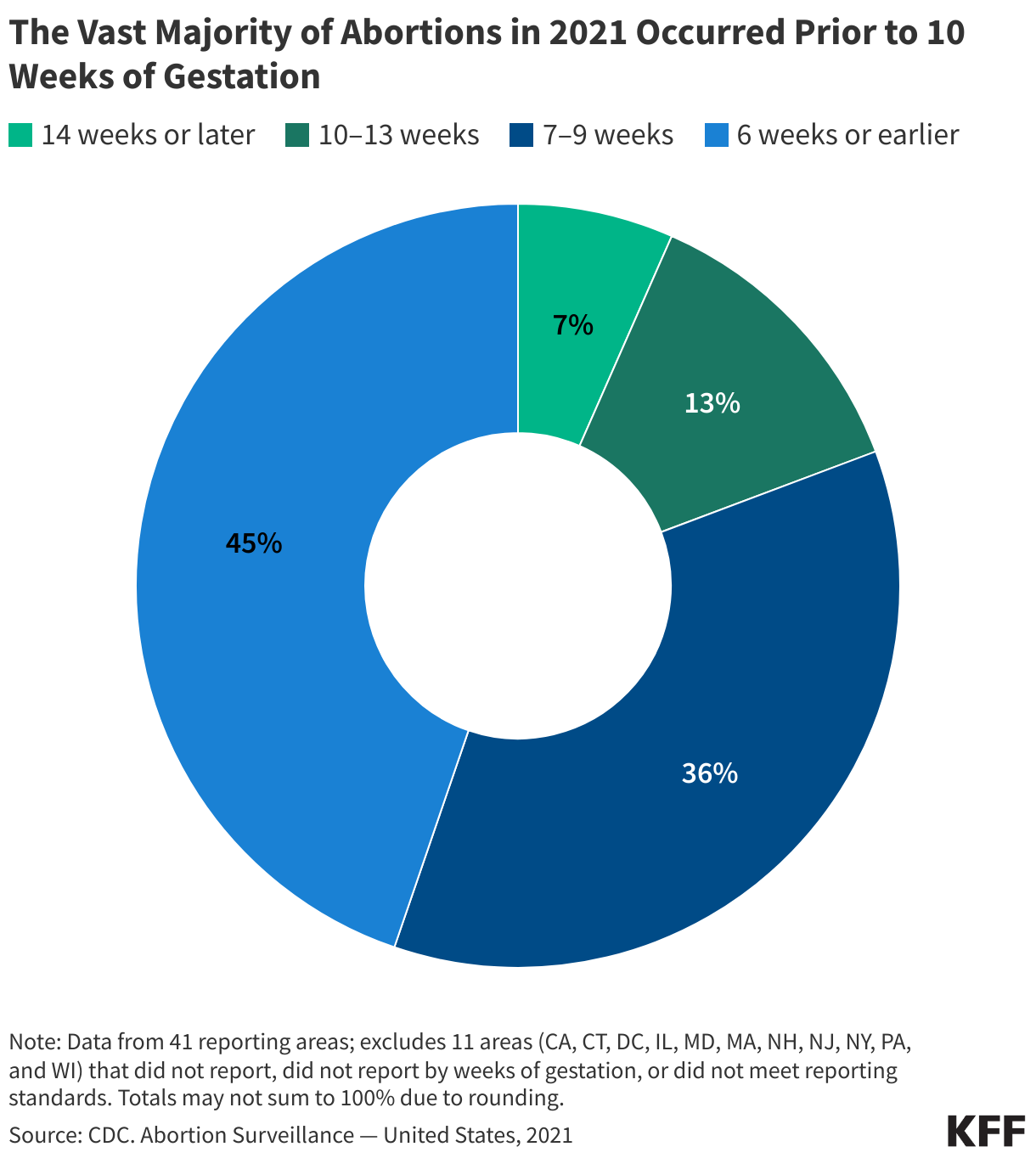
The vast majority of abortions—approximately 93%—take place during the first trimester of pregnancy. CDC data from 2022 illustrates that roughly 40% of abortions occurred at or before six weeks of gestation, another 39% took place between seven and nine weeks, and 14% occurred between 10 and 13 weeks. Only 7% of procedures took place after the first trimester.
When patients undergo abortions later in pregnancy, it is frequently due to severe medical complications, such as non-viable fetal anomalies or situations where continuing the pregnancy poses a severe threat to the life and health of the pregnant individual.
Where Care is Provided: Clinics, Telehealth, and Travel
Historically, abortion care has been delivered primarily through brick-and-mortar clinics specializing in reproductive health, alongside a smaller number of private physician practices. Following the Dobbs decision, the total number of independent physical clinics across the United States has steadily decreased, as many facilities in restricted states were forced to close or halt services. Consequently, geographic disparities in access have widened dramatically, leaving care heavily concentrated in states with protective laws.
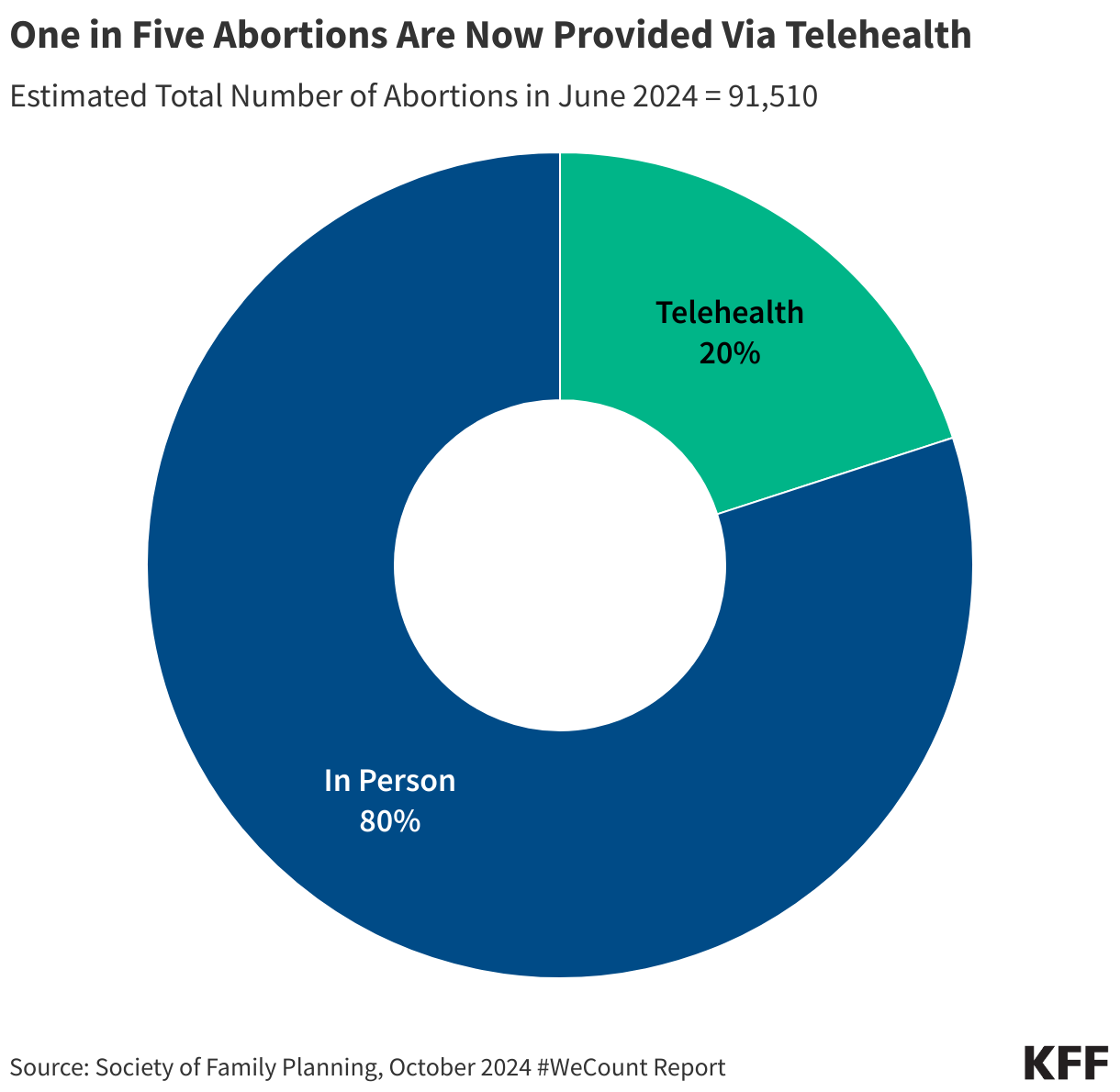
To navigate these geographic barriers, telehealth has emerged as a vital delivery mechanism, accounting for 28% of all abortions by 2025. While procedural abortions must be performed in person within a clinical setting, medication abortion can be administered either in person or virtually without a physical clinic visit. For many years, federal policy under the FDA required clinicians to dispense mifepristone physically within a healthcare facility. However, permanent policy revisions finalized by the FDA in December 2021 eliminated the in-person dispensing requirement, and subsequent updates in early 2023 allowed certified retail pharmacies to dispense medication abortion pills to patients with a prescription. These regulatory shifts opened the floodgates for virtual abortion clinics.
At the same time, self-managed abortions—typically involving medication pills obtained from online international pharmacies or shipped by mail without direct consultation with a U.S.-based physician—have grown, though tracking their exact volume remains difficult since they exist outside formal healthcare channels. Studies indicate that tens of thousands of self-managed medication abortions occurred in the immediate wake of the Dobbs ruling.
For those seeking in-person care while residing in restricted states, interstate travel has become a defining characteristic of the post-Dobbs era. Data from the Guttmacher Institute indicates that in 2024, approximately 155,000 patients traveled across state lines to receive abortion care. While this figure represents a slight decrease from 170,000 travelers in 2023, it remains nearly double the 81,000 travelers recorded in 2020. This interstate travel is heavily concentrated toward states bordering restrictive jurisdictions, such as Illinois, North Carolina, Kansas, and New Mexico, though the rise of telehealth has partially absorbed some of this travel demand.
Costs and Insurance Coverage
The financial burden of obtaining an abortion varies widely depending on the chosen method, the type of facility, and the gestational age of the pregnancy. Costs can start as low as $40 through certain virtual clinics providing medication abortion pills, but procedural options and abortions sought later in pregnancy frequently exceed $1,000.
Insurance coverage for these services remains heavily restricted across both private insurance plans and public programs like Medicaid and Medicare. Among women of reproductive age, roughly six in ten are covered by private insurance, one in five rely on Medicaid, and one in ten remain uninsured.
Prior to the Dobbs ruling, numerous states enacted restrictions on private insurance coverage, banning abortion benefits from Affordable Care Act (ACA) Marketplace plans. By September 2026, 10 states maintained policies restricting abortion coverage in private plans, and 25 banned coverage in ACA exchange plans. Conversely, 13 states actively require state-regulated private plans to cover abortion, with ten of those states mandating coverage without any patient cost-sharing.
In the public sector, the longstanding Hyde Amendment continues to ban the use of federal funds for abortion services within Medicaid, Medicare, and other federal programs, except in narrow circumstances involving rape, incest, or a threat to the life of the pregnant person. However, individual states retain the option to use purely state-level funds to cover abortions under broader circumstances for Medicaid beneficiaries—a policy currently adopted by 21 states.
Data from 2021 indicated that roughly 26% of abortion patients utilized Medicaid to help cover the cost of care, 11% used private insurance, and 60% paid entirely out of pocket. Patients living in states with highly restrictive abortion policies faced a significantly higher likelihood of paying out of pocket compared to those residing in protective states, underscoring the deep financial divides shaping reproductive healthcare access across the country.



