
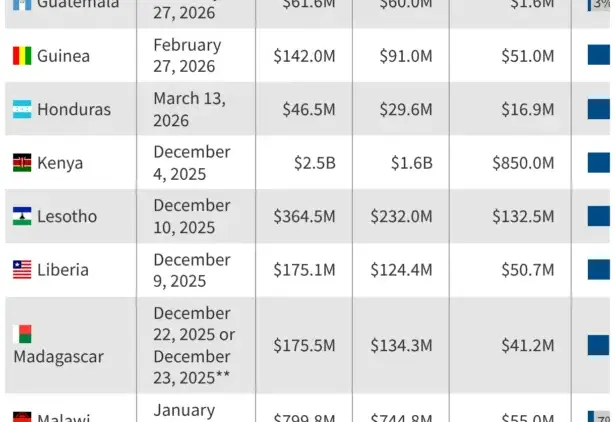
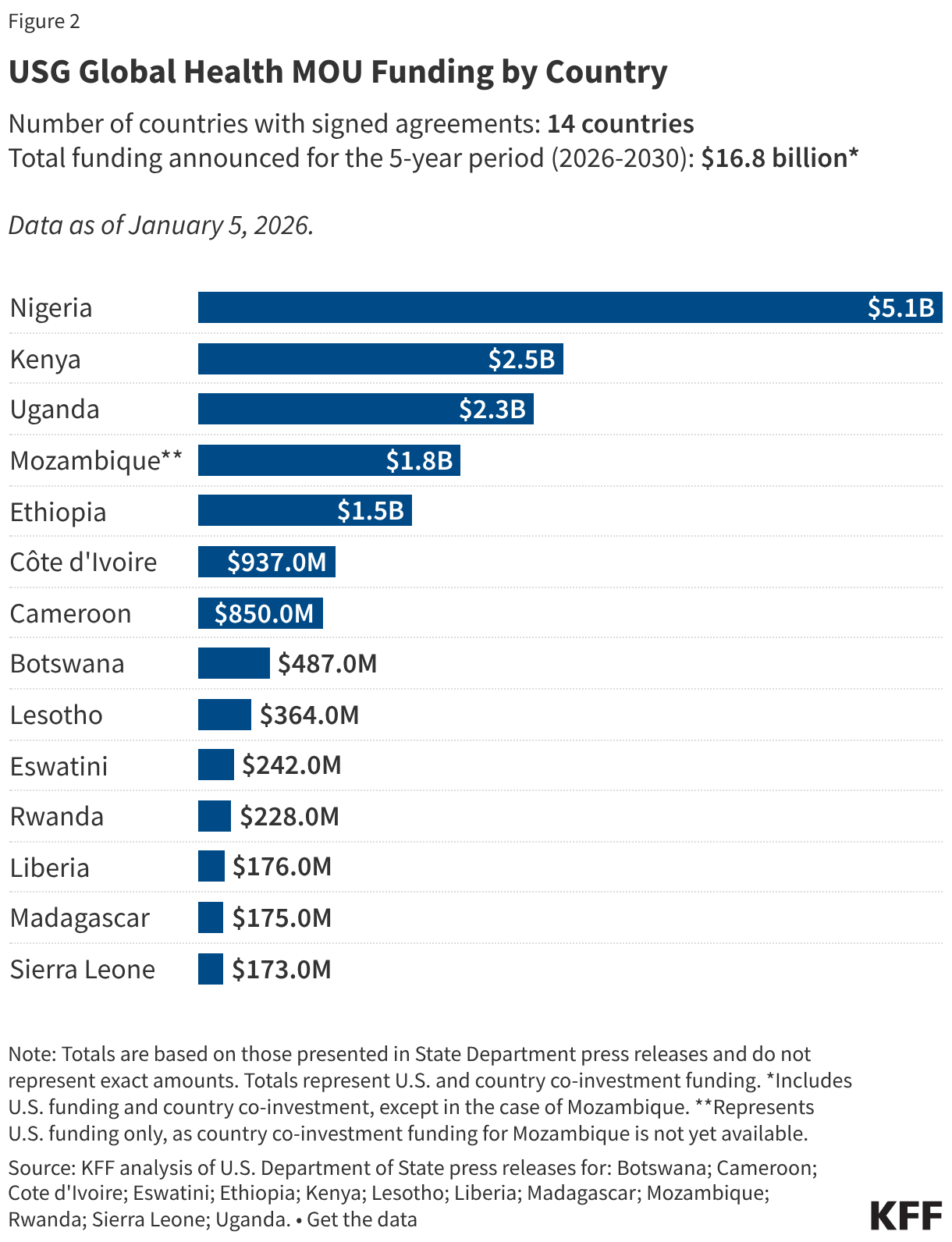
The United States government is reshaping its approach to international health cooperation, introducing structural shifts that emphasize long-term country ownership and domestic financial commitments from partner nations. Following the release of the "America First Global Health Strategy" on September 18, 2025, the U.S. has systematically moved to establish bilateral health cooperation agreements with countries that receive U.S. global health assistance. These formal agreements, primarily structured as Memorandums of Understanding (MOUs), represent five-year strategic frameworks intended to guide U.S. engagement in each nation’s domestic health sector from 2026 through 2030.
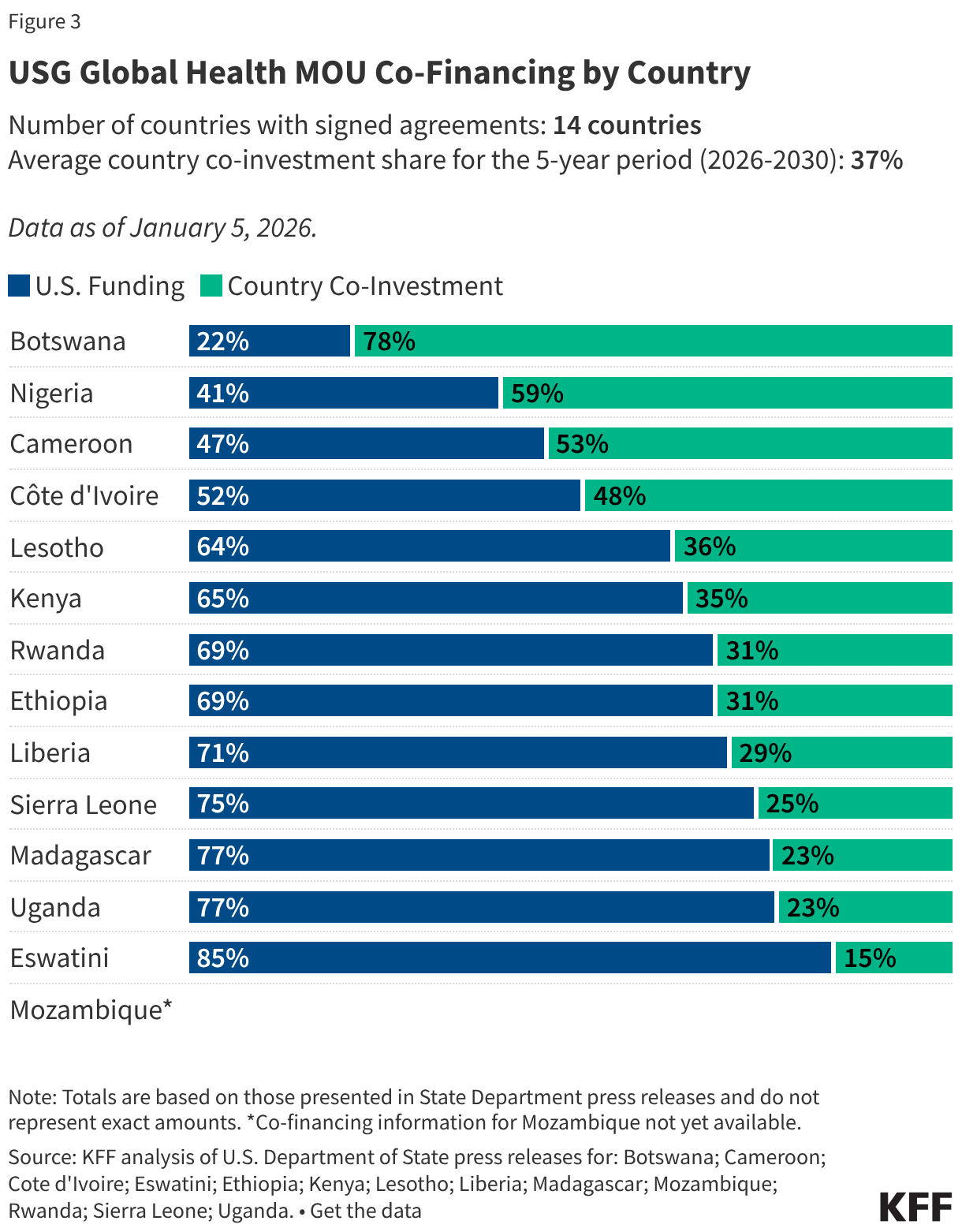
According to policy documentation, the overarching objective of these bilateral compacts is to help partner nations transition toward more resilient and durable health systems. Central to this strategy is a planned shift away from reliance on U.S. foreign assistance toward total local ownership. Under the terms of these agreements, partner governments pledge to progressively increase their own domestic health spending—referred to as co-investment in health—over the course of the five-year implementation period while U.S. financial assistance gradually decreases. The U.S. Department of State began signing these agreements in late 2025, a rolling process that has continued through 2026, with full implementation slated to roll out across participating regions.
To monitor these developments, policy analysts and researchers have compiled a comprehensive tracker based on official press releases issued by the State Department, various U.S. embassies, and partner country Ministries of Health, alongside the text of the MOU documents where publicly accessible. As of the most recent data update in September 2026, the tracker accounts for 35 countries that have successfully concluded these agreements with the U.S. government.

While the majority of these compacts follow the standard five-year timeline, exceptions exist based on regional negotiations and local government planning cycles. Global health MOU agreements established with Bolivia, Botswana, Panama, and South Sudan are structured as three-year periods instead of five. Additionally, the implementation framework varies slightly by country; for instance, the Philippines did not sign a traditional MOU but instead finalized a "Strategic Objective Agreement." While an overall funding amount has been disclosed for the Philippine arrangement, comprehensive co-financing details have not yet been made publicly available by participating agencies.
Similarly, specific co-financing details remain partially obscured for other nations, such as Vietnam. While the U.S. government announced it would provide approximately $98.75 million to support Vietnam’s MOU framework, precise domestic co-financing breakdowns are less clear in the immediate public record. However, official State Department documentation indicates that Vietnam’s annual health expenditure is projected to expand significantly over the course of the five-year MOU period, growing by an estimated $10.5 billion from a baseline of $23.3 billion up to $33.8 billion.

A broad examination of the financial figures associated with the 35 signed agreements reveals notable shifts in resource allocation when compared against historical U.S. global health spending in these regions. Historical funding totals—which incorporate appropriated and planned amounts for fiscal years 2021 through 2023, alongside requested amounts for fiscal years 2024 and 2025 under the Global Health Programs account—provide a baseline for measuring the evolution of U.S. commitments. These historical figures represent U.S. funding exclusively and do not incorporate domestic country co-investment contributions.
Across the 35 countries with finalized agreements, the aggregate comparison between historical funding and proposed five-year MOU funding reveals a notable contraction in total U.S. financial outlay. Specifically, the data indicates a combined total reduction of approximately $7.5 billion, representing a 34 percent decrease in U.S. global health funding across these specific partner nations. This reduction underscores the core philosophy of the America First Global Health Strategy, which relies on the expectation that increased domestic health financing by partner governments will compensate for the tapering of direct U.S. foreign aid.
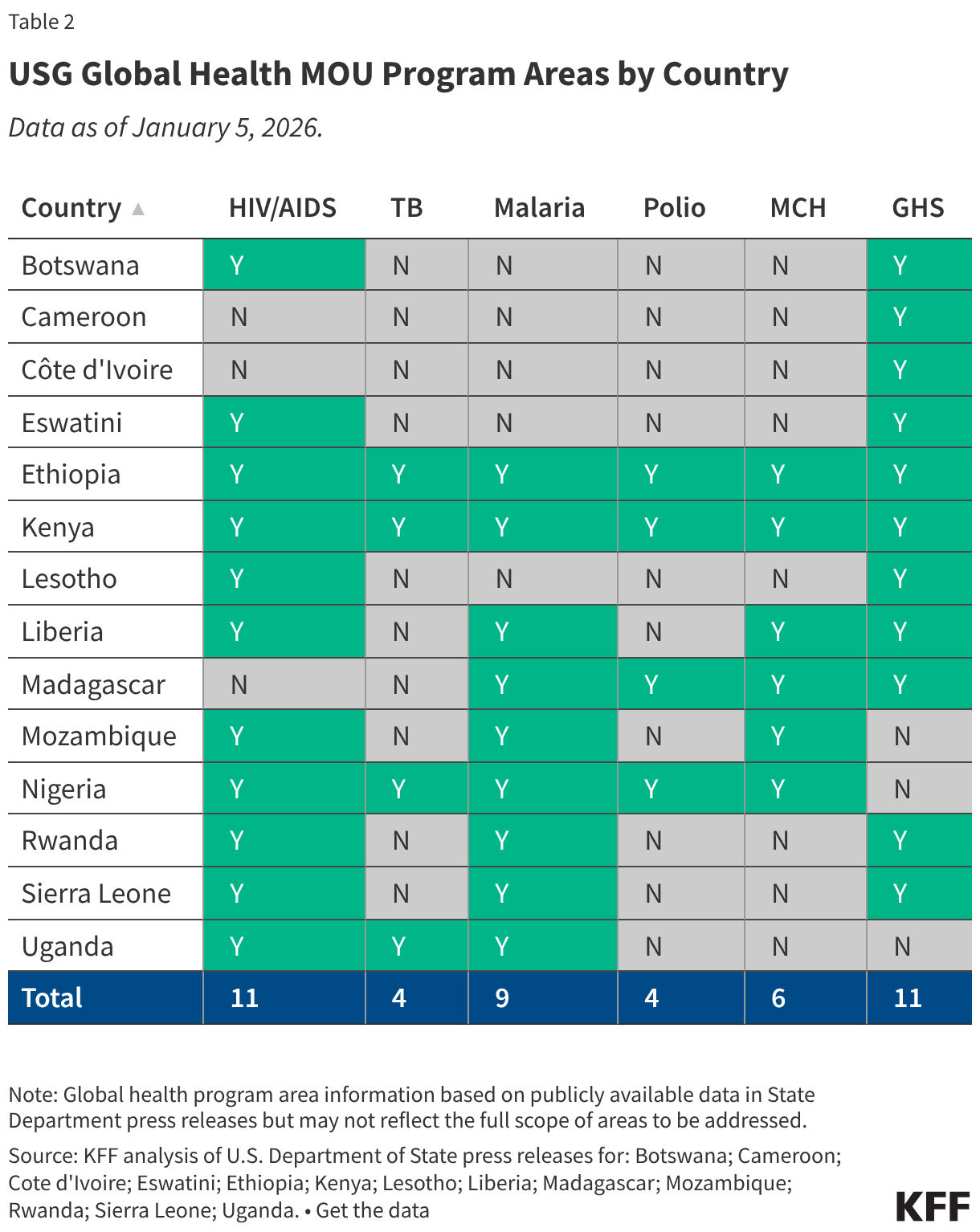
The scope of these agreements extends beyond raw financial figures to encompass specific programmatic priorities tailored to the public health landscape of each partner nation. Keyword analyses of the available MOU texts and diplomatic press releases show that bilateral frameworks target a diverse range of health sectors, including maternal and child health, infectious disease control, health systems strengthening, and global health security. For global health security specifically, country agreements were categorized as targeting this area if they explicitly referenced security measures, outbreak preparedness, rapid response activities, or the containment of emerging cross-border biological threats.
However, because the availability of comprehensive MOU text varies significantly by country—with many details reliant entirely on brief diplomatic press releases—observers note that public summaries may not fully capture the entirety of the specialized health program areas addressed in every individual agreement.
Methods
This ongoing tracking initiative compiles information on U.S. bilateral global health agreements derived from official, publicly accessible sources. The primary documentation includes statements, press releases, and policy briefs published by the U.S. Department of State, regional U.S. embassies, and partner country Ministries of Health, supplemented by complete MOU texts where released into the public domain. The repository is designed to be dynamic, subject to regular updates as new diplomatic agreements are formally executed and additional financial or programmatic data becomes publicly available.
At present, complete MOU text—which provides the deepest level of granularity regarding funding allocations and milestone targets—is publicly accessible for only a limited subset of participating nations. For these specific countries, data points are extracted directly from the official document text, with overall financial totals calculated as the cumulative sum of annual allocations outlined within the agreements.
Programmatic categorizations, including specific designations for global health security initiatives, rely primarily on keyword searches of available documentation. Because diplomatic press releases are often concise by nature, the structured data may not comprehensively reflect every specialized public health intervention or secondary program area targeted within a given country’s bilateral agreement. The repository continues to evolve as transparency initiatives provide further insights into the implementation of the America First Global Health Strategy.



