For millions of people living with hearing loss, a simple Friday night invitation to "go see a movie today" is rarely met with an immediate, carefree yes. Instead, going to the movies often comes with a persistent layer of logistical uncertainty. Patrons are forced to ask themselves a series of frustrating questions before buying a ticket: Will specialized captioning devices actually be available at the box office? Will those devices be fully charged and functioning properly throughout the runtime of the film, or will the screen glitch halfway through? Too often in the past, the answer to these questions has been a disappointing no, turning what should be a relaxing communal pastime into a stressful ordeal.
Going to the movies should be an enjoyable, seamless experience for everyone, regardless of their hearing ability. That fundamental belief is what drove accessibility advocates across Virginia, including dedicated members of the Hearing Loss Association of America (HLAA), to push relentlessly for a better, more reliable solution. Their efforts culminated in the introduction and passage of House Bill 602 (HB 602), a legislative measure establishing open-captioned movie screening requirements across the Commonwealth.
The advocacy campaign successfully shifted policy, and since July 1, 2026, movie theaters operating five or more locations in Virginia have been legally required to offer open-captioned showings for widely released films. This pivotal change is already helping significantly more people share the vibrant, collective moviegoing experience with their families and friends without the constant worry of technical failures.
Bridging the Gap Between Entertainment and Inclusion
The impact of the new legislation is deeply personal for residents like Claire Fornsel, co-vice president of the HLAA Virginia Beach Chapter, and her husband, Ken Reichert.
"My husband Ken has hearing loss," Fornsel explains, highlighting the everyday compromises couples and families face. "In the past, he would go along to movies he couldn’t hear, just because he loves me. Now, with the passage of the Virginia movie theater open captioning legislation, we can enjoy the entertainment together."
To understand the significance of the law, it helps to distinguish between the two primary forms of cinematic captioning. Closed-captioning devices typically rely on individual hardware—such as cumbersome cup-holder display units or specialized glasses—that must be handed out by theater staff, adjusted by the user, and returned after the credits roll. These devices frequently break, run out of battery, or cause physical discomfort and social awkwardness for the viewer, who is forced to look away from the main screen to catch the dialogue.
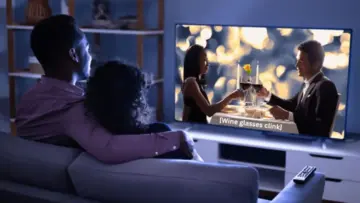
In contrast, open captions display dialogue, important sound cues, and speaker identifications directly on the primary movie screen for the entire audience to see. Because the text is baked right into the presentation, they require no special equipment, eliminating the risk of lost hardware, broken displays, or awkward adjustments.
Furthermore, HB 602 addresses the issue of public awareness by requiring theaters to clearly label open-captioned viewings with an "OC" designation on ticketing platforms and schedules. Theaters must also provide accessible information about how patrons can request open captioning later in a film’s theatrical run. All of these changes combine to empower people with hearing loss—as well as anyone else who simply prefers or benefits from open captioning—to make entertainment plans with the same confidence as any other ticket buyer. It replaces lingering uncertainty with inclusion, dignity, and equal access.
From Grassroots Advocacy to Legislative Victory
The successful journey of HB 602 from an idea to signed state law is a testament to the power of coordinated grassroots advocacy. The measure was championed by Delegate Phil Hernandez of the 94th District. In August 2025, Delegate Hernandez was approached by a local accessibility advocate who had been inspired by successful open-caption policies implemented in other states and jurisdictions. Hernandez, whose own sister is deaf, immediately embraced the effort as a vital component of his broader legislative commitment to making Virginia more accessible and welcoming for residents of all abilities.
To draft and refine the legislation, Hernandez sought guidance and strategic support from Neil Snyder, the HLAA’s director of public policy, alongside dedicated disability advocacy organizations such as Access Virginia and the Virginia Department for the Deaf and Hard of Hearing (VDDHH). Armed with expert testimony and community backing, the bill was officially introduced in January 2026. It moved swiftly through both chambers of the Virginia General Assembly, reflecting broad bipartisan recognition of the need for better accessibility standards. On April 6, 2026, Governor Abigail Spanberger officially signed the bill into law.
The legislative momentum relied heavily on grassroots mobilization led by members of the HLAA Virginia Beach, Virginia Peninsula, and Greater Richmond Chapters. Kenneth Reichert—president of the HLAA Virginia Beach Chapter and a 30-year U.S. Navy veteran with service-connected hearing loss—spoke publicly and passionately about the urgent need for accessible movie experiences during a town hall event hosted by Delegate Hernandez.
Other HLAA members across the Commonwealth, including chapter leaders Angela Hill, Kathy Richter, Keith McAllister, Claire Fornsel, Richard Wiltse, Bobby Graves, and Larry Herbert, actively reached out to state lawmakers, sharing personal stories and urging them to vote in favor of the bill. Their concerted efforts demonstrate how local advocates can drive meaningful, systemic change when they collaborate closely with forward-thinking legislators and community organizations.
Benefits That Reach Beyond the Hearing-Impaired Community
While the primary beneficiaries of HB 602 are individuals with hearing loss, the positive ripples of the new law extend far beyond that demographic. As Claire Fornsel and Ken Reichert’s experiences illustrate, people who may not require open captions themselves can now seamlessly share the cinematic experience with loved ones who do.
"Imagine grandparents taking their grandchildren to see the latest Disney or Pixar film," Reichert notes. "In the past, hearing loss might have made the outing frustrating or even impossible. With open-captioned screenings, the whole family can enjoy the film together without the need for specialized equipment."
Beyond bringing families together, research and modern viewing habits indicate that open captions offer widespread educational and cultural benefits. Watching movies and videos with on-screen text can reinforce foundational literacy skills in school-age children, regardless of whether they have hearing impairments, by connecting spoken words with written text in real time. Similarly, English-language learners frequently rely on captions to strengthen vocabulary and language comprehension. Advocates also point out a broader cultural shift: many younger viewers simply prefer watching media with captions turned on at all times, independent of their personal hearing acuity.
With this milestone achievement, Virginia joins a rapidly expanding national movement. The Commonwealth now stands alongside Hawaii, Maryland, Washington, D.C., New York City, and Washington State, all of which have previously adopted open-captioning regulations for public theaters. Each new regional victory helps smooth the legal and logistical path for other states to follow suit.
For accessibility advocates across the country, these wins serve as a powerful reminder that meaningful, lasting change often begins when everyday community members find their voices and work together toward a common goal. Meanwhile, the Hearing Loss Association of America continues its national advocacy work, currently tracking similar open-captioning bills making their way through the Michigan and New York state legislatures as the push for universal accessibility continues to grow.