As the global landscape of pandemic management continues to evolve, significant changes are taking place regarding how historical data and government responses to COVID-19 are documented and preserved. Public health tracking platforms that once provided real-time insights into the spread of SARS-CoV-2 and the corresponding policy interventions implemented by governments worldwide are reaching operational milestones and, in some cases, concluding their active data-gathering phases. These developments mark a transitional chapter in the public documentation of a global health crisis that has profoundly shaped societies, economies, and healthcare infrastructure over recent years.
Policy Actions and Institutional Tracking Frameworks
A primary component of this historical record involves tracking government policy responses, which encompassed a vast array of measures designed to mitigate virus transmission, stabilize financial markets, and support overburdened healthcare networks. While these monitoring frameworks have provided invaluable transparency throughout the public health emergency, active updates for several policy action trackers are drawing to a close.
According to recent administrative updates, specific policy action trackers will no longer receive fresh data inputs because their foundational data sources have officially ceased tracking government responses to COVID-19. For ongoing research and deeper contextual analysis of these historical interventions, observers are directed to specialized academic repositories, such as the Oxford Covid-19 Government Response Tracker, which serves as a comprehensive archive of public policy decisions enacted during the height of the pandemic.
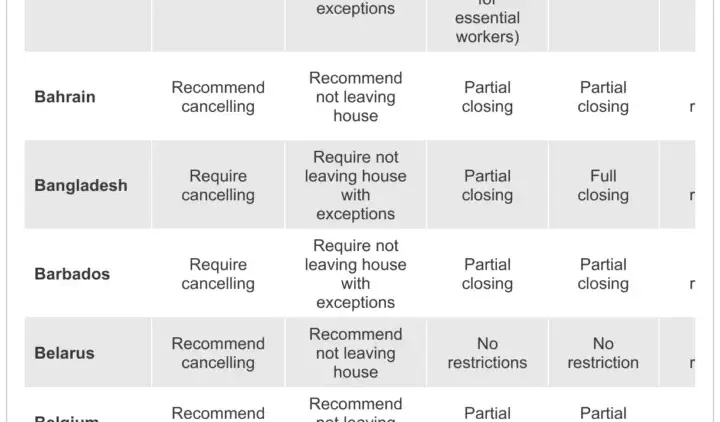
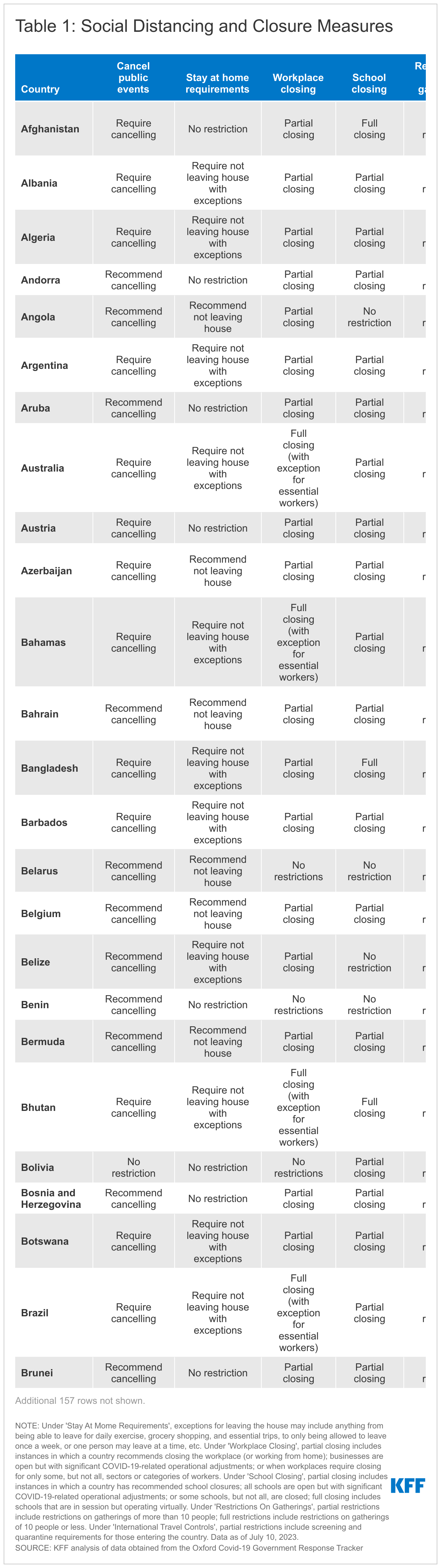
Historically, the evaluation of government interventions was categorized into distinct spheres: social distancing and closure measures, economic relief initiatives, and health systems measures. These categories captured the wide-ranging scope of state authority and public administration deployed during the crisis.
Within the realm of social distancing and closure measures, nations implemented diverse strategies aimed at interrupting viral transmission chains. These guidelines varied significantly across jurisdictions, reflecting differing epidemiological situations, legal frameworks, and administrative capacities. Stay-at-home requirements, for instance, featured a spectrum of exceptions and enforcement levels. In some regions, residents were permitted to leave their residences for daily exercise, grocery shopping, and essential trips, whereas other jurisdictions enforced much stricter limitations, restricting departures to once a week or stipulating that only a single designated household member could venture outside at any given time.
Workplace closures similarly displayed considerable variation. Partial closures often encompassed official recommendations urging employers to facilitate remote work arrangements, businesses operating under significant COVID-19-related operational modifications, or mandates requiring closures for specific high-risk economic sectors while allowing others to remain open. School closures followed a parallel pattern, ranging from full physical shutdowns paired with mandatory virtual instruction to partial closures affecting select grade levels, or institutions remaining in session while adopting rigorous operational adjustments.
Restrictions on gatherings were implemented to curb super-spreading events, with classifications generally distinguishing between partial restrictions—often targeting gatherings exceeding ten people—and full restrictions capping allowable assemblies at ten individuals or fewer. International travel controls introduced another layer of defense, frequently involving mandatory screening protocols, testing requirements, and quarantine mandates for incoming travelers. Meanwhile, other baseline containment efforts, such as the cancellation of public events, formed a cornerstone of early non-pharmaceutical interventions.
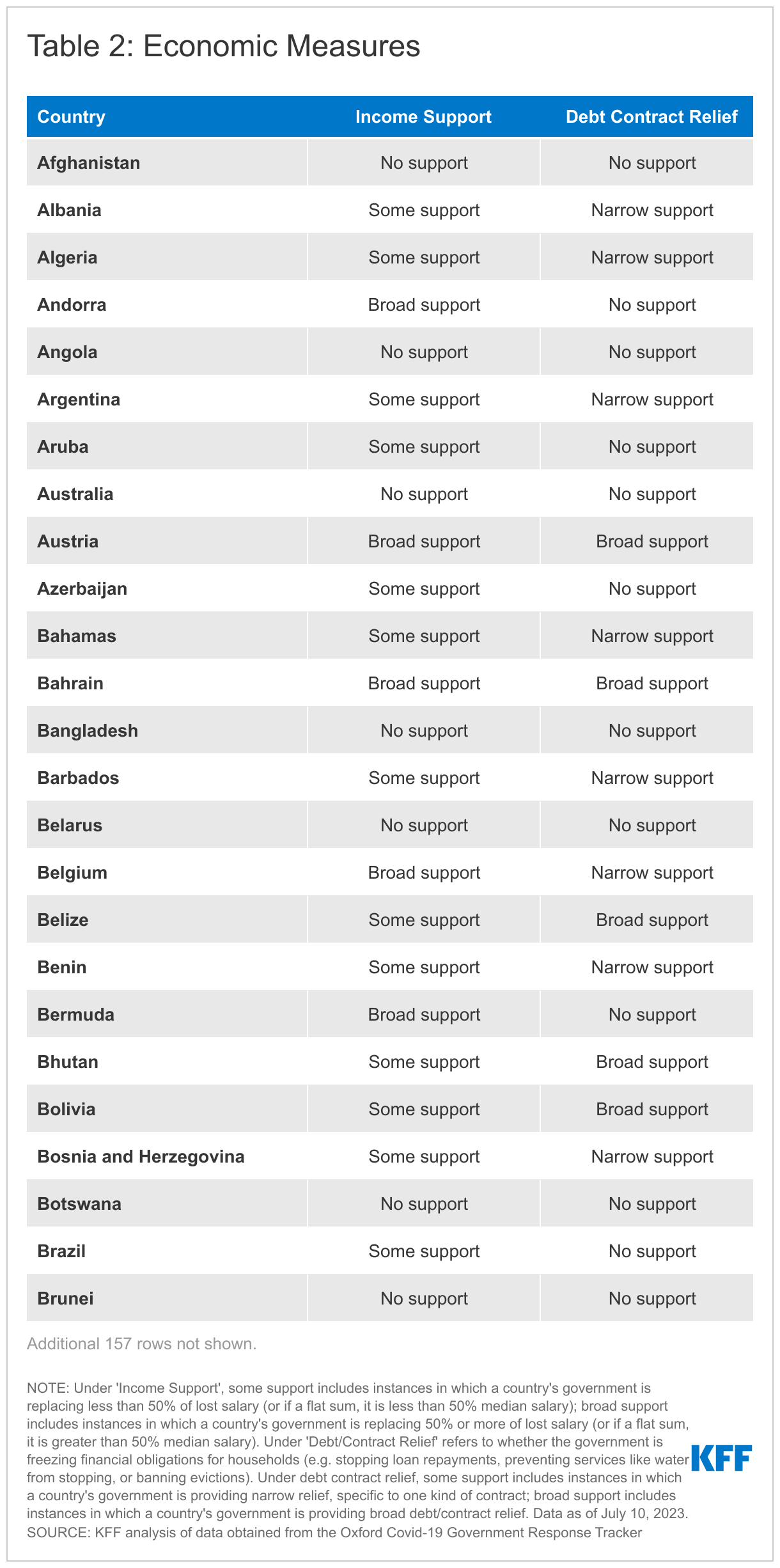
The economic fallout of the pandemic necessitated unprecedented fiscal and monetary responses from national governments. Economic measures were broadly divided into income support and debt or contract relief. Income support initiatives were evaluated based on their scale and generosity. Narrow support typically involved government programs replacing less than half of a worker’s lost salary, or providing flat-sum payments amounting to less than fifty percent of the median salary. Conversely, broad support encompassed robust governmental intervention where fifty percent or more of lost salary was replaced, or where flat-sum payments exceeded the median salary threshold. Debt and contract relief measures similarly ranged from targeted protections for specific types of financial agreements to broader moratoriums on evictions, loan repayments, and utility shutoffs.
Health systems measures focused heavily on shoring up clinical capacity, rolling out vaccination campaigns, and mandating protective behaviors. Vaccine eligibility criteria expanded progressively over time, moving from initial phases prioritizing key workers, clinically vulnerable non-elderly populations, and the elderly, toward broader demographic availability. Policies regarding facial coverings ranged from advisory recommendations issued by public health authorities to mandatory requirements enforced in specific indoor settings, public transit, or situations where maintaining adequate physical distance was unfeasible.
Methods, Sources, and Historical Data Continuity
Understanding the empirical data behind COVID-19 cases, deaths, and government policies requires a clear understanding of the methodologies and data sources utilized by public health tracking initiatives. Comprehensive tracking tools have historically synthesized figures from multiple institutional authorities to provide global, regional, income-level, and country-specific breakdowns of the pandemic’s toll.
For confirmed COVID-19 cases and deaths, administrative responsibility for global data aggregation transitioned over the course of the pandemic. As of March 7, 2023, all official tracking data regarding infection totals and fatalities have been drawn directly from the World Health Organization’s Coronavirus Dashboard. Prior to that date, many prominent trackers relied upon the foundational mapping data provided by the Johns Hopkins University Coronavirus Resource Center, which officially concluded its comprehensive data collection efforts on March 10, 2023.
To ensure consistency and comparability across diverse populations, demographic denominators are derived from the United Nations World Population Prospects, utilizing standardized total population estimates from 2021. Economic classifications, which allow analysts to examine how the pandemic affected low-, middle-, and high-income countries differently, are established using the latest World Bank Country and Lending Groups framework. Regional classifications, meanwhile, adhere strictly to World Health Organization geographic groupings.
To optimize system performance and prevent sluggish load times on digital interfaces, many public health dashboards maintain a rolling window of recent information, typically containing data exclusively from the most recent two hundred days. However, complete historical datasets remain publicly accessible for researchers and epidemiologists via dedicated institutional code repositories, such as GitHub pages maintained by data science initiatives. While these dashboards strive to present the most
current information available, users must account for an inherent reporting lag—often spanning approximately two weeks—between the time health data is generated locally and its official integration into global repositories.
Furthermore, data administrators frequently conduct retrospective audits and technical corrections to ensure absolute accuracy. For instance, data normalization updates implemented on March 18, 2024, clarified that specific reporting metrics represent new cases and deaths accumulated over the course of a full week rather than mathematical averages calculated on a daily basis over a seven-day period.
The underlying documentation for government policy actions relies extensively on the Oxford Covid-19 Government Response Tracker, managed by the Blavatnik School of Government at the University of Oxford. This repository systematically categorized policy measures in place at the country level through the conclusion of 2022. Researchers seeking to replicate studies or examine the granular methodology behind these policy codifications can consult the extensive codebooks and interpretation guides provided through the Oxford research portal.
As public health tracking transitions from active, real-time surveillance to archival and historical analysis, these comprehensive datasets and methodological frameworks ensure that the global response to the COVID-19 pandemic remains thoroughly documented for future scientific inquiry, policy evaluation, and public health preparedness.